
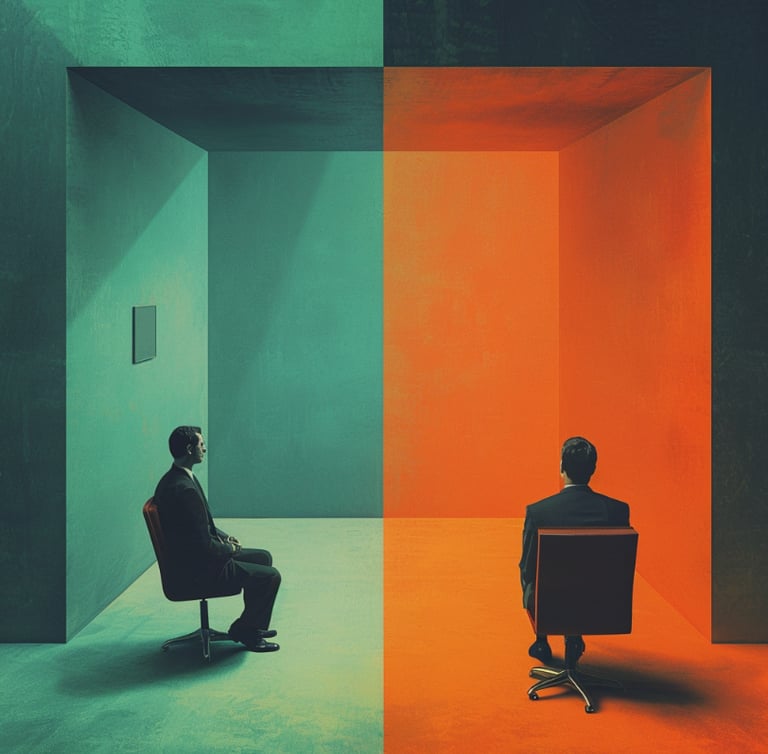
The Problem We Solve:

Most design isn’t ignored because it’s bad — it’s ignored because the brain can’t feel it. People don’t remember details; they remember how you made them feel.

Design shapes that feeling long before logic steps in — through rhythm, spacing, color, contrast, and the micro-signals the brain detects in a fraction of a second.

When design fails to speak the brain’s language, it disappears.

Design is psychology disguised as aesthetics.

Design psychology

02

What We Do

We design for the brain before the eye — using emotion, rhythm, and cognition as our raw materials.

Every pixel is placed with intention: reducing cognitive load, shaping emotion, strengthening trust, increasing recall, guiding unconscious decision-making.

This is design as behavioral influence, not decoration.

Why Design Psychology Matters?

The brain feels in 0.3 seconds and rationalizes in 7.

Safety keeps your audience. Emotion moves them. You only win the first moment — the feeling.

Brands designed with psychological intention:
• increase user attention by up to 38%
• raise trust perception by 21%
• reduce bounce through micro-signal cues
• lift perceived professionalism by 34%
• increase revenue by up to 23%

Design isn’t cosmetic. It’s behavioral engineering through aesthetics.

Emotion-led design increases engagement by up to 31% and trust by 92%. Because emotion is the shortcut to memory.

The subconscious makes 95% of decisions — design simply guides it.

What to Expect?

1. Why does design fail?

Most design fails because it’s built for expression, not reception.
The brain filters predictable visuals in under 2.7 seconds, discarding anything that feels familiar. When design speaks to the creator instead of the mind that receives it, it vanishes.

2. What is the neuro-aesthetic advantage?

Neuro-aesthetics studies how color, shape, rhythm, and space influence emotion before logic. Designs built on these principles increase user attention by up to 38%, not because they’re pretty — but because they feel inevitable to the brain.

3. Why do people remember feelings over details?

The emotional brain processes meaning 400% faster than the rational brain. People forget what you said — but remember how your brand made them feel. Emotion is the shortcut to memory.

4. What makes design emotional instead of just pretty?

Pretty decorates. Emotional directs. Emotional design uses psychology to reduce cognitive load, influence rhythm, and create effortless interaction — raising engagement by up to 32%.

5. Why do subtleties matter so much?

The brain is wired for micro-signals. Tiny cues — hover timing, button warmth, motion softness — can increase dwell time by 18% and trust perception by 21%. Subtleties are behavioral levers, not aesthetics.

6. What defines a high-trust visual identity?

Consistency. A coherent visual system can raise perceived professionalism by 34% and revenue by up to 23%. Trust is built through visual predictability that feels emotionally safe and instantly recognizable — not through volume.

Data as quiet confidence.
Emotion as the delivery system.
Consciousness as the architecture.